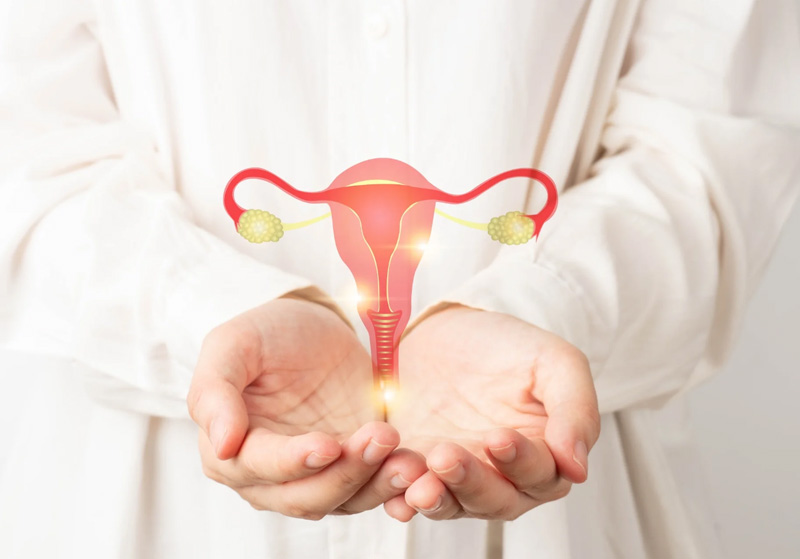
Polycystic Ovarian Syndrome is one of the most common hormonal conditions affecting women in India, and it is also one of the most misunderstood. The name itself creates confusion: most women with PCOS do not have cysts on their ovaries in the conventional sense — rather, they have multiple small, immature follicles (hence ‘polycystic’) that reflect the fundamental disruption of ovulation at the heart of the condition. Many women receive a PCOS diagnosis and are given a prescription for the contraceptive pill to ‘regulate’ their cycles — with no explanation of what PCOS actually is, why it matters beyond periods, or what it means for their future fertility.
If you have PCOS and are planning to start a family, here is what you need to know:
PCOS affects ovulation — not fertilisation or implantation directly. The primary fertility challenge in PCOS is the irregular or absent release of a mature egg each month. This makes natural conception difficult because without ovulation, there is no egg to fertilise. But PCOS does not prevent ovulation absolutely — many women with PCOS do ovulate, just less predictably. And for those who do not ovulate regularly on their own, medications that induce ovulation (letrozole is the current first-line agent) can stimulate the ovaries to release an egg on a predictable schedule. The success rates of ovulation induction in PCOS are genuinely good: approximately 70 to 80 percent of women with PCOS ovulate in response to letrozole, and pregnancy rates over several cycles of ovulation induction with timed intercourse approach 50 to 60 percent cumulatively.
Weight and insulin resistance matter for PCOS management. In overweight women with PCOS, even modest weight loss — 5 to 10 percent of body weight — can restore spontaneous ovulation and improve hormonal parameters significantly. This is because excess adipose tissue increases insulin production, which drives up androgen levels, which disrupt ovulation. Reducing insulin resistance through weight loss, exercise, and dietary modification (reducing refined carbohydrates, eating a lower glycaemic index diet) is both the most evidence-based and the most sustainable intervention for PCOS.
When to step up to IVF for PCOS: If ovulation induction with letrozole or clomiphene for three to four cycles fails to result in pregnancy, or if there are additional fertility factors present (male factor, tubal factor, advanced age), the next step is IVF. IVF in PCOS requires particular care because these women are at elevated risk of ovarian hyperstimulation syndrome (OHSS). At Dr. Krishnakumar’s clinic, patients with PCOS undergoing IVF receive a personalised low-dose stimulation protocol, with close monitoring throughout stimulation, an agonist trigger to reduce OHSS risk, and often a freeze-all strategy (freezing all embryos and doing a frozen transfer in the next cycle) to eliminate the residual OHSS risk associated with a fresh transfer.
Pregnancy with PCOS requires monitoring. Women who conceive with PCOS — whether naturally or with assisted reproduction — have a higher risk than average of gestational diabetes, pregnancy-induced hypertension, and preterm birth. These risks are manageable with appropriate antenatal care, but they require awareness and proactive monitoring. This is another reason why having an experienced obstetrician — one who has managed thousands of pregnancies in women with PCOS — looking after your pregnancy matters.